Home

TTR Product Evolution

Building scalable UX foundations and delivering high-impact features in a data-driven platform.

Project overview

Implementation of UX design processes, scalable systems, and high-value features for a complex financial intelligence platform.

What I worked on:

I led UX efforts by establishing a design process from scratch, defining product flows, and contributing to features.

About TTR Data

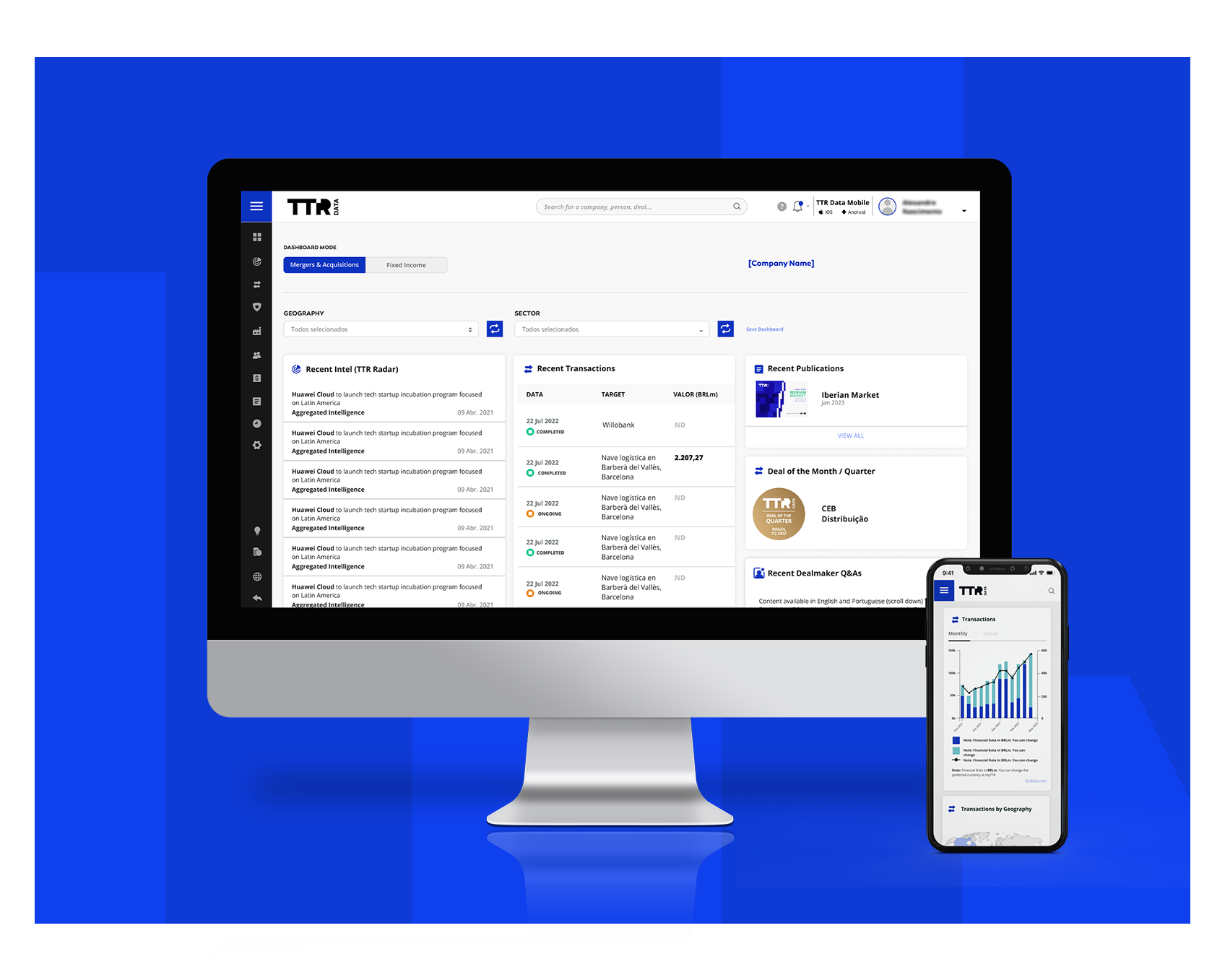
TTR (Transaction Track Record) is a business intelligence platform specialized in M&A, private equity, venture capital, and asset acquisition. It provides real-time transaction data, company insights, and financial market tracking for investors, advisors, and legal professionals across Latin America and Iberia.

What I worked on:

The first paragraph of an article is often an introduction to the text. Sometimes it’s called the
Project Kickoff

When I joined, TTR had a mature dataset but lacked a structured design process. There was no consistent UX methodology, documentation, or scalable UI framework.

The first challenge was to create structure — I began by mapping and componentizing the existing UI based on what was live in production. This groundwork allowed us to transition from a scattered design workflow to a systemized one, ready for growth.

Discovery

To uncover usability issues and inconsistencies across the platform, I conducted interface audits, explored user flows with stakeholders, and analyzed how data-heavy components (like filters, tables, and profiles) were being used.

Through this discovery, we identified major pain points around:

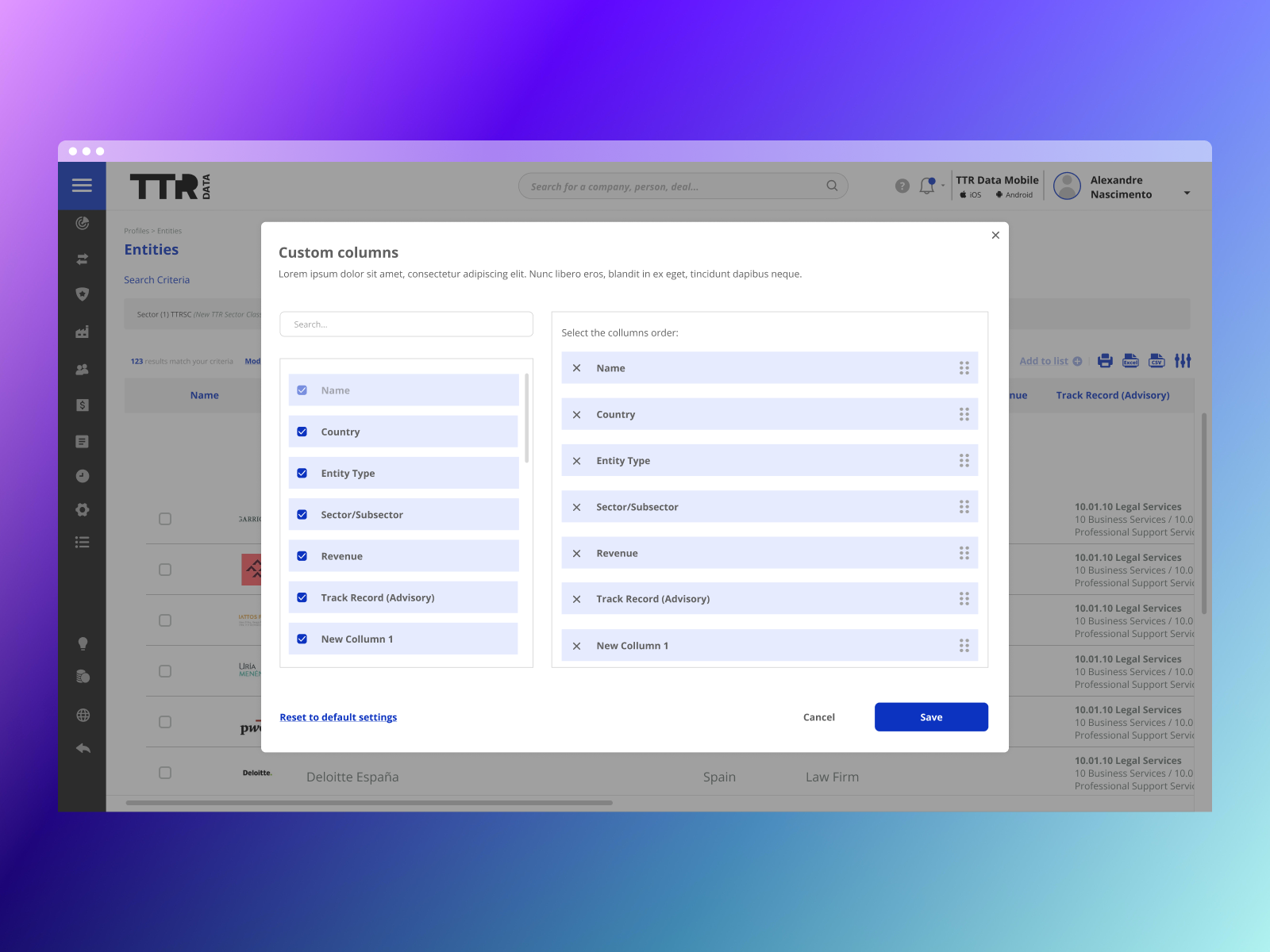
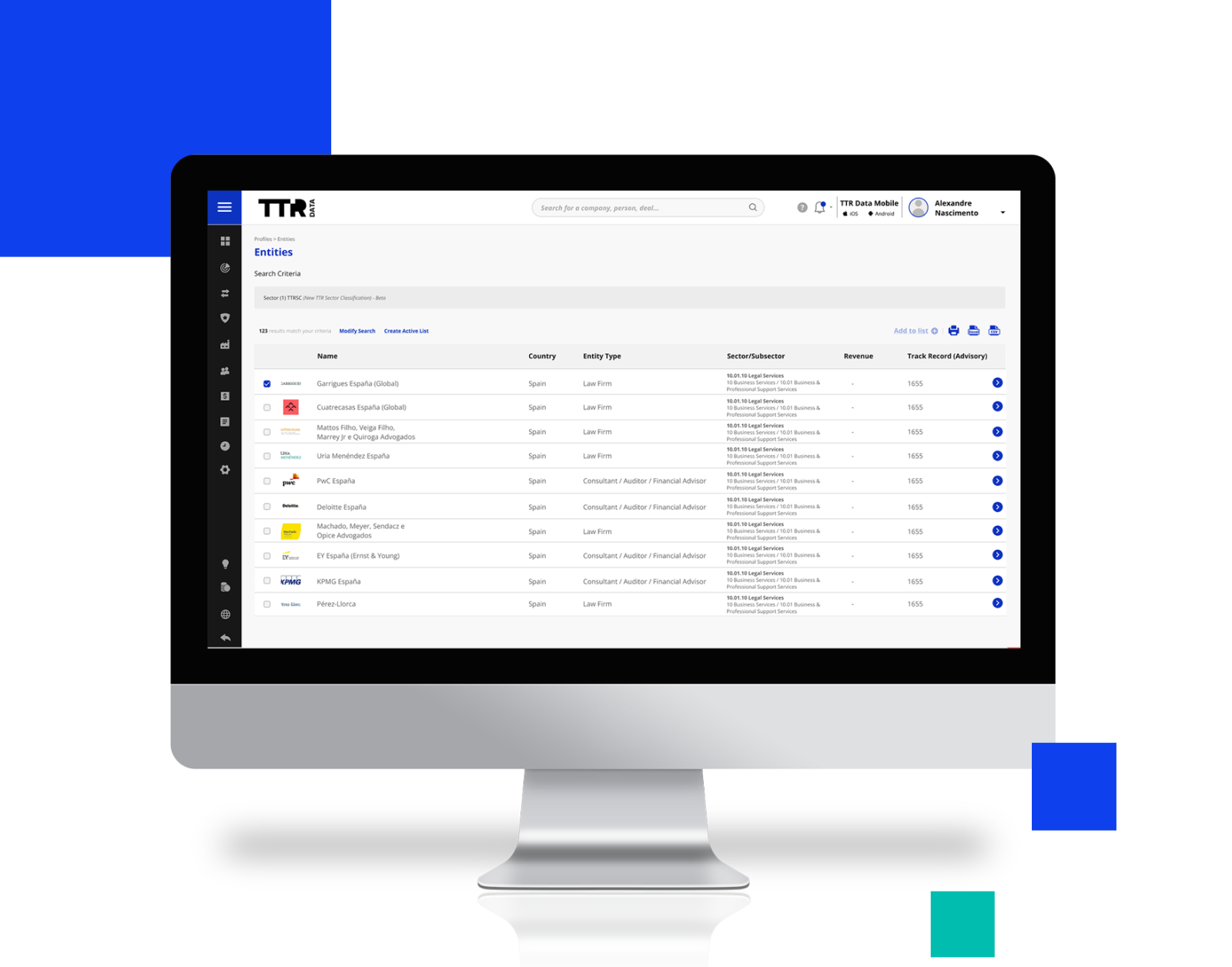
  • Complex table views with no customization options
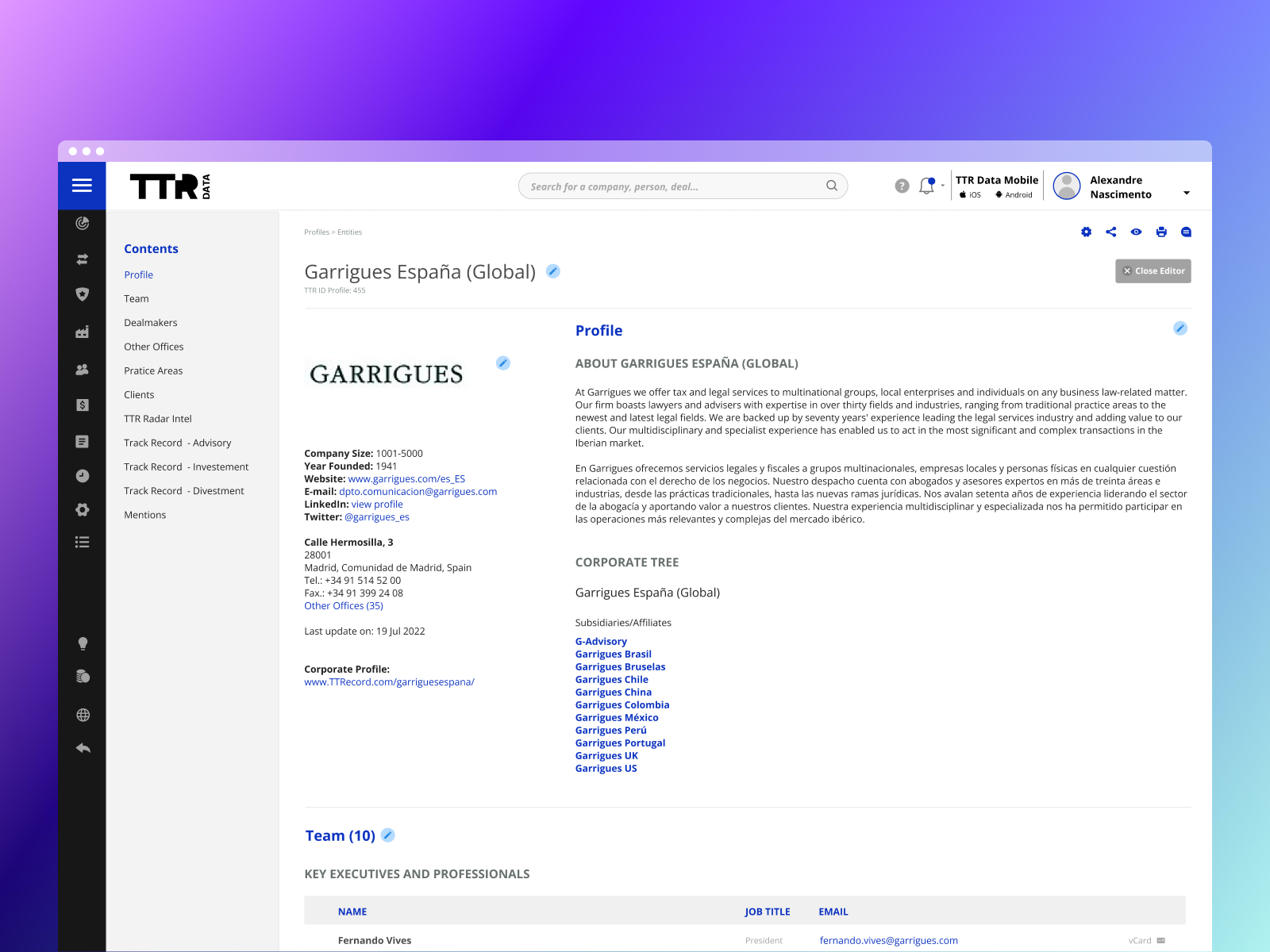
  • Inconsistent layouts across company profile pages
  • Boolean search features with poor guidance and low adoption

These insights shaped our feature roadmap and design priorities.
Insights to Direction

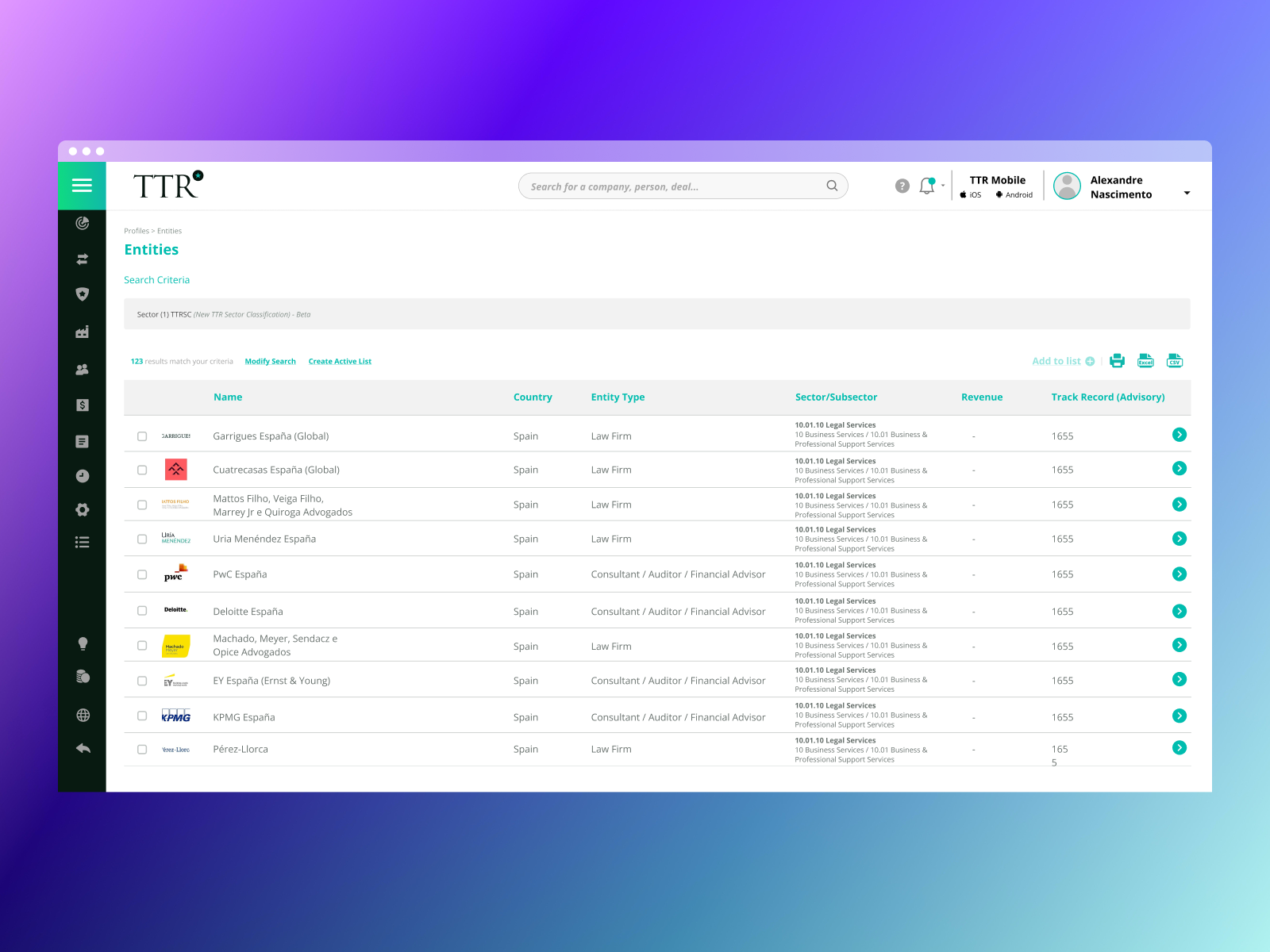
One of the most strategic decisions came early: I restructured the Figma file into a fully componentized system mirroring production. This gave us immediate control over visual and functional consistency.

This decision paid off during TTR’s company-wide rebrand. Thanks to the structured design system, we were able to update the entire interface with minimal engineering effort, replacing styles and components globally with little to no code-level intervention.

Feature direction was also guided by deep collaboration with product and data teams:

  • We added table customization with column selection and reordering to reduce noise and improve user control
  • Standardized company profile layouts to increase scannability and support comparison
  • Redesigned boolean search inputs to help users understand syntax and apply filters more confidently

"By structuring the design system from day one, we turned a complex rebrand into a one-click transformation."

Feature Strategy & UX Priorities

Our approach focused on turning dense data into accessible, task-oriented UI experiences. Each new or redesigned feature was built on three pillars:

  • Modularity: UI patterns were designed as reusable building blocks
  • Scalability: Layouts had to adapt across languages, data volumes, and user roles
  • Clarity: Emphasis on readability and user control, especially in search and tables

Highlights

  • Established the first structured design process within the company


  • Enabled seamless adoption of a company-wide rebrand through a componentized design system
  • Improved key features such as custom tables, company profile consistency, and boolean search usability
  • Supported product discovery across other business units within the group
  • Helped align product, design, and engineering with a shared system and workflow

Prototype Outcomes

Each redesigned feature was tested internally with power users and stakeholders. The results validated usability gains:

  • Boolean search saw higher engagement after syntax guidance was introduced
  • Custom tables reduced time to insight for analysts and subscribers
  • Visual consistency improved platform trust and stakeholder confidence in scalability

The improvements also accelerated development, as engineers could rely on clear design tokens and ready-to-use components.

Ongoing Impact & Role

Over the course of two years, I collaborated with multiple teams to evolve the platform. My responsibilities included:


  • Designing and delivering new features from scoping to handoff
  • Evolving the design system with new patterns, tokens, and documentation
  • Supporting the exploration of new products within the group
  • Acting as a UX advocate inside a data-driven, engineer-led environment

This long-term involvement helped shape the TTR platform into a more consistent, flexible, and user-aligned product.

Conclusion

My work at TTR was about more than polishing interfaces — it was about bringing design maturity to a complex data product. Through process, systemization, and close collaboration, we not only delivered a better experience for users, but laid the groundwork for scalability across the organization.

See the next case

Let’s work together

Home

TTR Product Evolution

Building scalable UX foundations and delivering high-impact features in a data-driven platform.

Project overview

Implementation of UX design processes, scalable systems, and high-value features for a complex financial intelligence platform.

What I worked on:

I led UX efforts by establishing a design process from scratch, defining product flows, and contributing to features.

About TTR Data

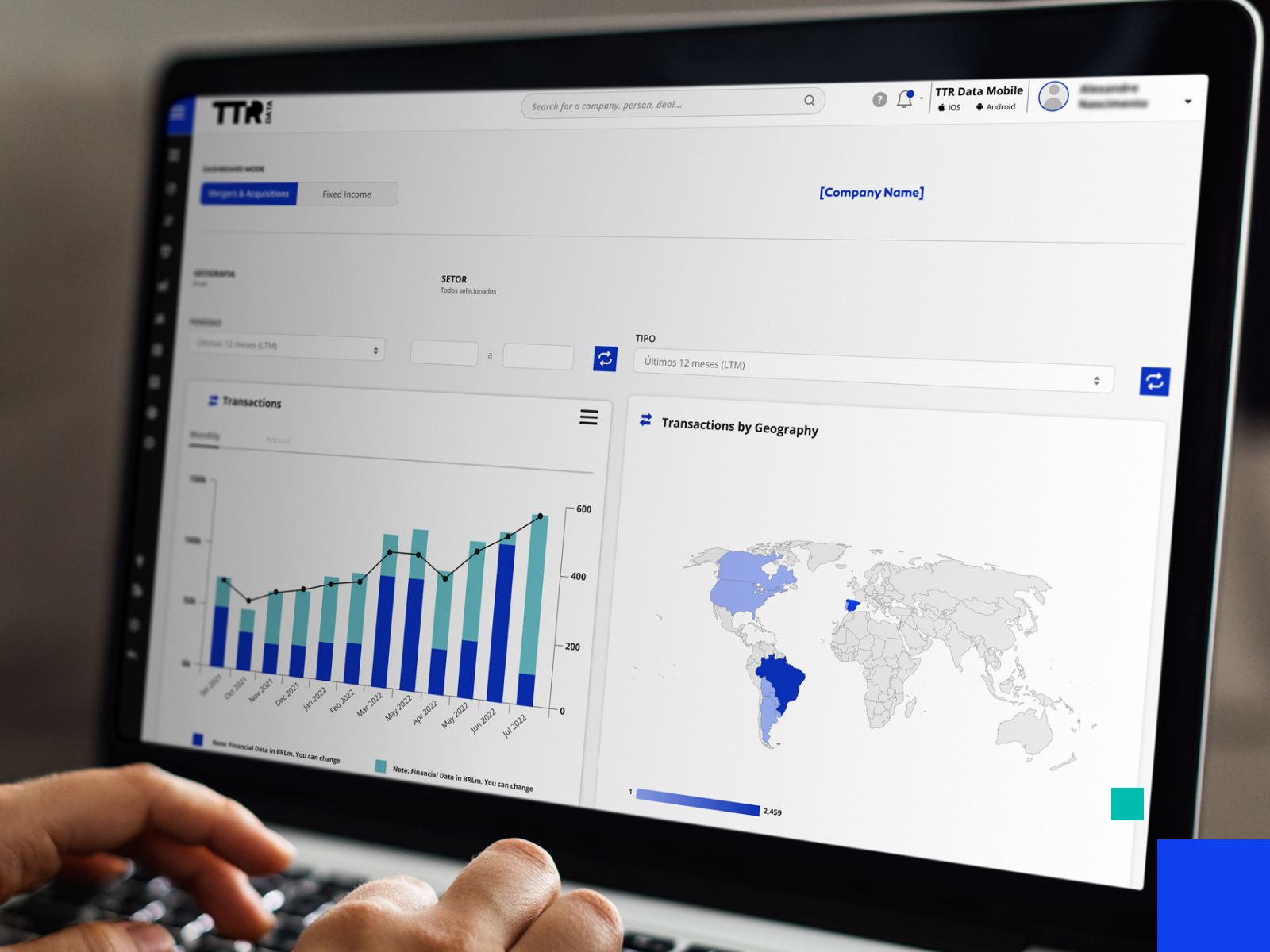
TTR (Transaction Track Record) is a business intelligence platform specialized in M&A, private equity, venture capital, and asset acquisition. It provides real-time transaction data, company insights, and financial market tracking for investors, advisors, and legal professionals across Latin America and Iberia.

What I worked on:

The first paragraph of an article is often an introduction to the text. Sometimes it’s called the

Project Kickoff

When I joined, TTR had a mature dataset but lacked a structured design process. There was no consistent UX methodology, documentation, or scalable UI framework.

The first challenge was to create structure — I began by mapping and componentizing the existing UI based on what was live in production. This groundwork allowed us to transition from a scattered design workflow to a systemized one, ready for growth.

Discovery

To uncover usability issues and inconsistencies across the platform, I conducted interface audits, explored user flows with stakeholders, and analyzed how data-heavy components (like filters, tables, and profiles) were being used.

Through this discovery, we identified major pain points around:

  • Complex table views with no customization options
  • Inconsistent layouts across company profile pages
  • Boolean search features with poor guidance and low adoption

These insights shaped our feature roadmap and design priorities.
Insights to Direction

One of the most strategic decisions came early: I restructured the Figma file into a fully componentized system mirroring production. This gave us immediate control over visual and functional consistency.

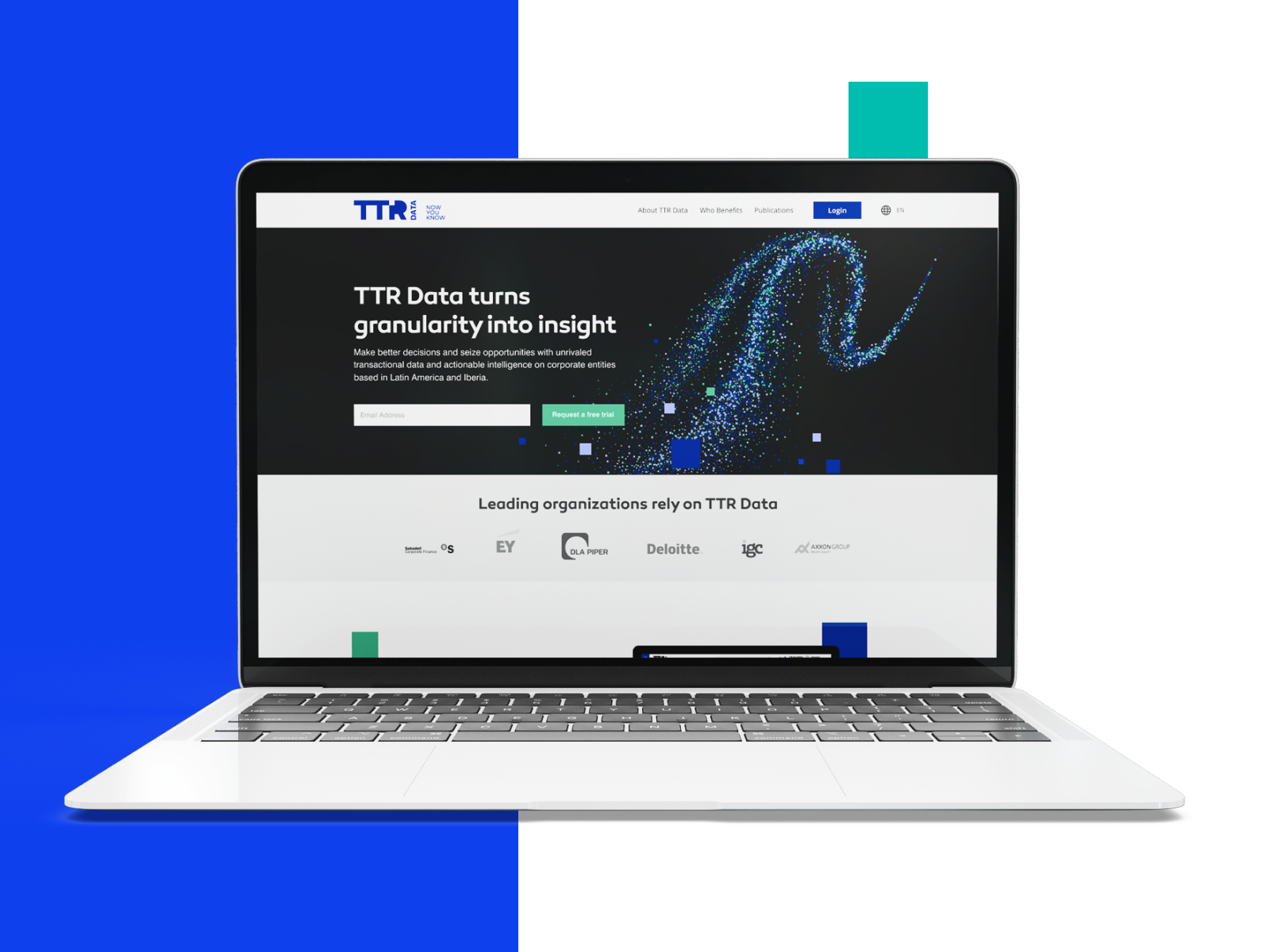
This decision paid off during TTR’s company-wide rebrand. Thanks to the structured design system, we were able to update the entire interface with minimal engineering effort, replacing styles and components globally with little to no code-level intervention.

Feature direction was also guided by deep collaboration with product and data teams:

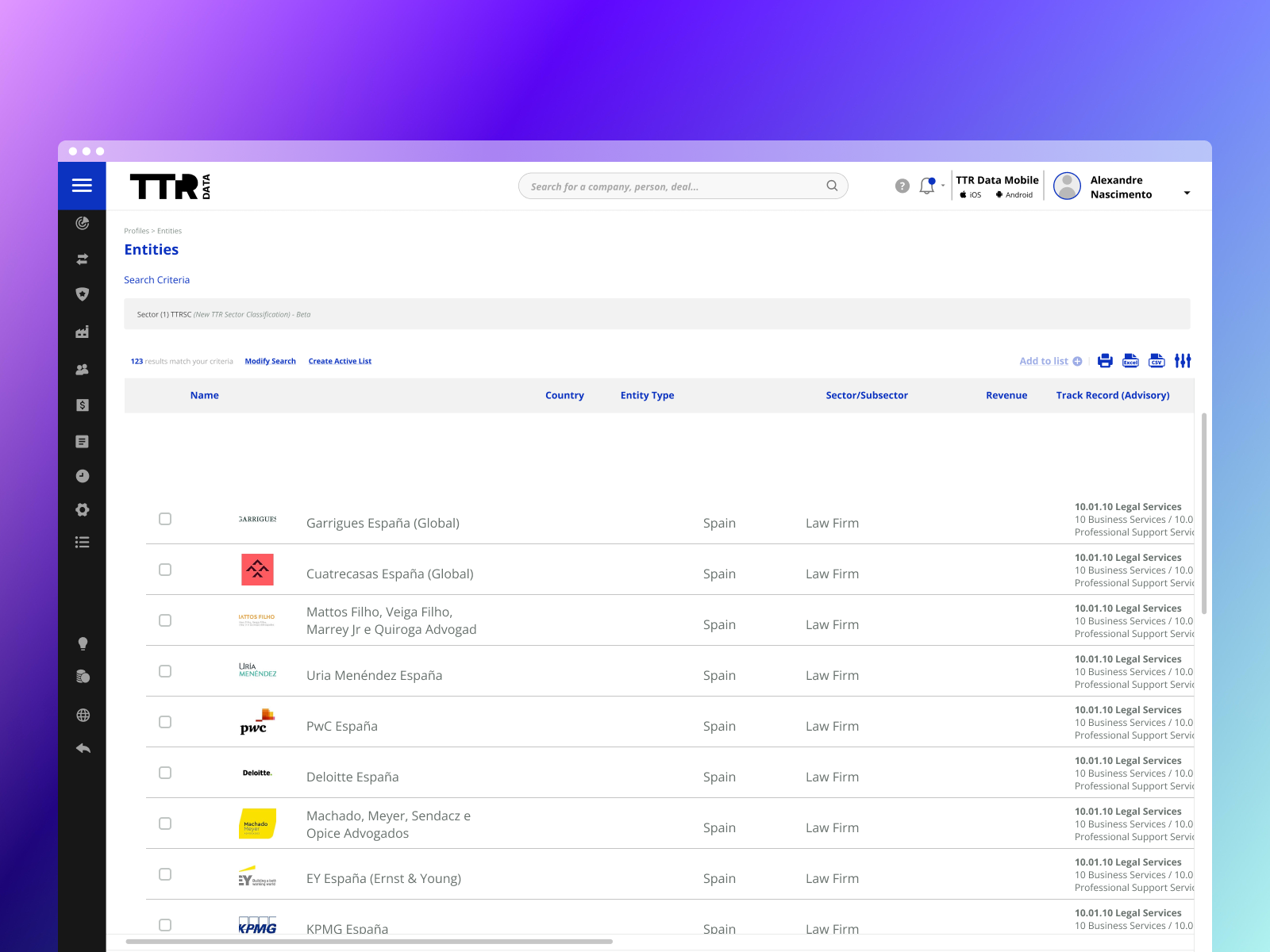
  • We added table customization with column selection and reordering to reduce noise and improve user control
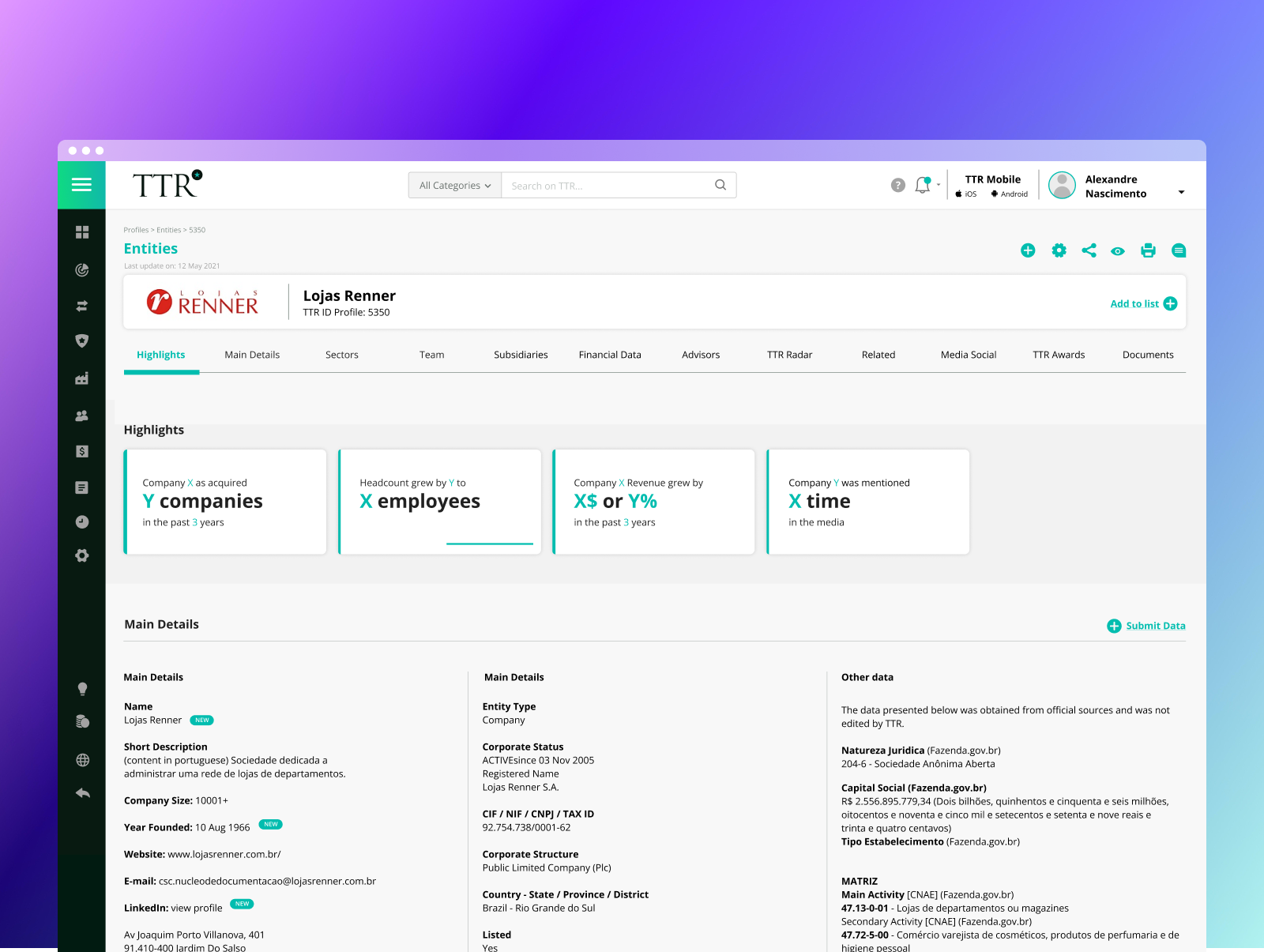
  • Standardized company profile layouts to increase scannability and support comparison
  • Redesigned boolean search inputs to help users understand syntax and apply filters more confidently
"By structuring the design system from day one, we turned a complex rebrand into a one-click transformation."

Feature Strategy & UX Priorities

Our approach focused on turning dense data into accessible, task-oriented UI experiences. Each new or redesigned feature was built on three pillars:

  • Modularity: UI patterns were designed as reusable building blocks
  • Scalability: Layouts had to adapt across languages, data volumes, and user roles
  • Clarity: Emphasis on readability and user control, especially in search and tables

Highlights

  • Established the first structured design process within the company


  • Enabled seamless adoption of a company-wide rebrand through a componentized design system
  • Improved key features such as custom tables, company profile consistency, and boolean search usability
  • Supported product discovery across other business units within the group
  • Helped align product, design, and engineering with a shared system and workflow
Prototype Outcomes

Each redesigned feature was tested internally with power users and stakeholders. The results validated usability gains:

  • Boolean search saw higher engagement after syntax guidance was introduced
  • Custom tables reduced time to insight for analysts and subscribers
  • Visual consistency improved platform trust and stakeholder confidence in scalability

The improvements also accelerated development, as engineers could rely on clear design tokens and ready-to-use components.
Ongoing Impact & Role

Over the course of two years, I collaborated with multiple teams to evolve the platform. My responsibilities included:


  • Designing and delivering new features from scoping to handoff
  • Evolving the design system with new patterns, tokens, and documentation
  • Supporting the exploration of new products within the group
  • Acting as a UX advocate inside a data-driven, engineer-led environment

This long-term involvement helped shape the TTR platform into a more consistent, flexible, and user-aligned product.

Conclusion

My work at TTR was about more than polishing interfaces — it was about bringing design maturity to a complex data product. Through process, systemization, and close collaboration, we not only delivered a better experience for users, but laid the groundwork for scalability across the organization.

See the next case

Let’s work together